


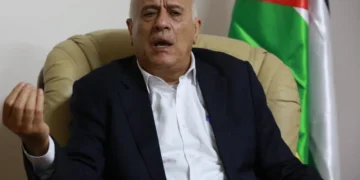



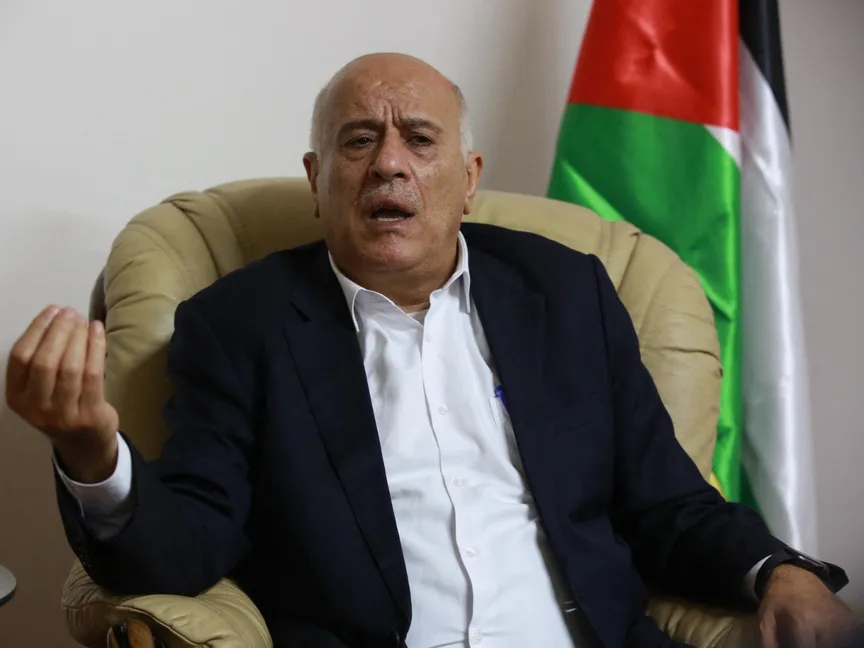
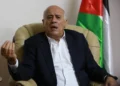
Jibril Rajoub, Secretary-General of Fatah’s Central Committee, said the movement is making political and national efforts to create the conditions necessary to hold Palestinian legislative and presidential elections ahead of the announced schedule through consensus with various factions. He warned that escalating Israeli attacks and settler violence in the occupied West Bank could push the situation toward an explosion.
In remarks to Asharq newspaper, Rajoub said Fatah is working to remove obstacles preventing elections from being held as soon as possible, in coordination with Palestinian political forces and factions. He explained that he would have preferred to reach a comprehensive national consensus before the presidential decree postponing the elections until September 2027 was issued. Legislative elections had previously been scheduled for November 2026.
Rajoub added that elections are a necessary national entitlement to renew political legitimacy and revitalize the Palestinian political system. He noted that the postponement decision had drawn criticism from international parties that believe Palestinian political institutions need renewed mandates and greater effectiveness.
He pointed out that the Palestinian political system faces mounting challenges more than three decades after the establishment of the Palestinian Authority.
This, he said, requires launching a comprehensive reform process that enables citizens to choose their representatives through the ballot box.
Cairo to Host Upcoming National Dialogue Conference
Rajoub revealed that Egypt is seeking to convene a Palestinian national dialogue conference in Cairo in the coming period, bringing together various Palestinian factions and political forces. No final date has yet been set for the conference.
His remarks followed a series of meetings in Cairo between a Fatah delegation led by Rajoub and representatives of Hamas, Palestinian Islamic Jihad, the Popular Front for the Liberation of Palestine (PFLP), the Democratic Front for the Liberation of Palestine (DFLP), and the Democratic Reform Current.
Rajoub explained that Fatah presented an integrated vision for national partnership during the meetings. The proposal includes mechanisms for holding legislative and presidential elections, as well as elections to the Palestinian National Council. Discussions also addressed ways to pursue joint national action against the occupation through popular and peaceful resistance.
Warnings of a Potential Explosion in the West Bank
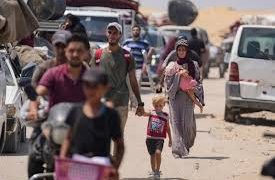
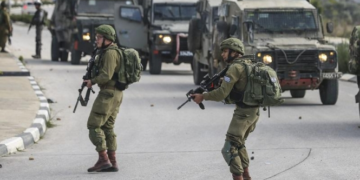
On the ground, Rajoub warned of the dangers posed by escalating tensions in the West Bank, saying that the growing number of settler attacks and Israeli military operations is intensifying public anger and could trigger reactions leading to a wider outbreak of violence.
He stressed the Palestinian leadership’s commitment to the unity of the Palestinian territories and to unified political representation under the umbrella of the Palestine Liberation Organization (PLO). He also emphasized the need to uphold the principle of one government, one authority, one law, and one legitimate armed force.
Talks on Gaza and Ending the Palestinian Division
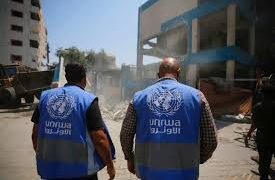
Rajoub said the Fatah delegation, which included Central Committee member Mohammad Shtayyeh, held talks in Cairo with international and regional officials on issues concerning the future of the Gaza Strip and its reconstruction.
Regarding dialogue with Hamas, he explained that Egyptian efforts are focused on ending the Palestinian division by discussing the political program, forms of struggle, and the future of the Palestinian state.
He said the meetings took place in a positive atmosphere and that the discussions had made progress on issues related to the PLO and its political program.
Rajoub also referred to internal efforts within Fatah to resolve organizational disputes and strengthen unity within the movement. He noted that meetings with the Democratic Reform Current were positive and helped bring viewpoints closer together.
Commitment to the National Program
Rajoub stressed that all Palestinian political activity should be grounded in the PLO’s national program and its international commitments. He emphasized that any amendments to the program must be made through national institutions and democratic mechanisms.
He further affirmed that the Palestinian national project is based on international legitimacy resolutions and political and diplomatic struggle.
The ultimate goal, he said, is to establish an independent Palestinian state founded on the rule of law and strong institutions, within the framework of a national consensus that preserves unity of decision-making and arm




Discussion about this post